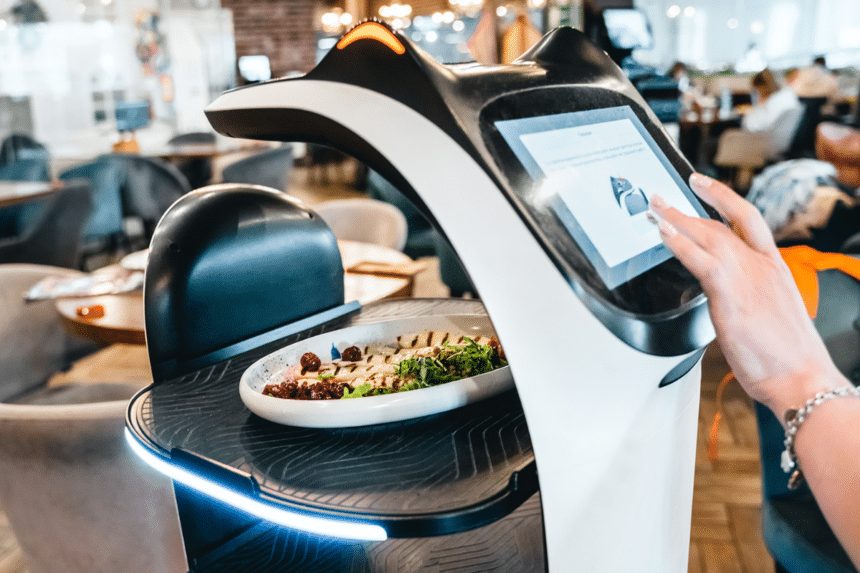
Beyond Robots in the Kitchen: How AI Helps F&B Industry Solve the Real Problems of Malaysian Business Owners
Imagine you are at a popular Malaysia Cafe in the heart of Bangsar or Mount Austin on a sweltering Sunday. The place is packed, the air conditioning is fighting for its life, and you can see the waiters running back and forth with a panicked look in their eyes. We’ve all been there—either as the frustrated customer waiting 45 minutes for a Latte, or the exhausted owner wondering why. Despite hiring five new people, the kitchen is still a mess. Many people think the solution is just to “add more people.” But the truth is, the bottleneck often isn’t the number of hands; it’s how the information flows. This is where the conversation about how AI Helps F&B Industry starts to make sense for the average person.
It’s not about replacing the human touch; it’s about fixing the “invisible” mess that happens between the table and the stove.
Why Your Favorite Cafe Always Runs Out of Salmon by 2 PM
We often feel a bit “potong stim” when we look at a menu, pick a dish, and the waiter says. “Sorry boss, this one finished.” It seems like a small thing, but for a business owner, it’s a nightmare of lost revenue and bad planning.
Interestingly, AI design menu strategies are changing this. Instead of just picking dishes because they look good on Instagram, smart systems analyze what people in specific areas—say, Penang versus Johor Bahru—actually eat at different times of the week.


If the data shows that people in your area crave spicy food on rainy afternoons. The system alerts the manager to prep more Sambal. It’s like having a crystal ball for your fridge. By predicting demand, ai restaurant automation ensures that the chef knows exactly what to defrost. Reducing that painful sight of throwing away expired ingredients at the end of the night.
AI Helps F&B Industry The “Silent Assistant” That Never Takes a Sick Leave
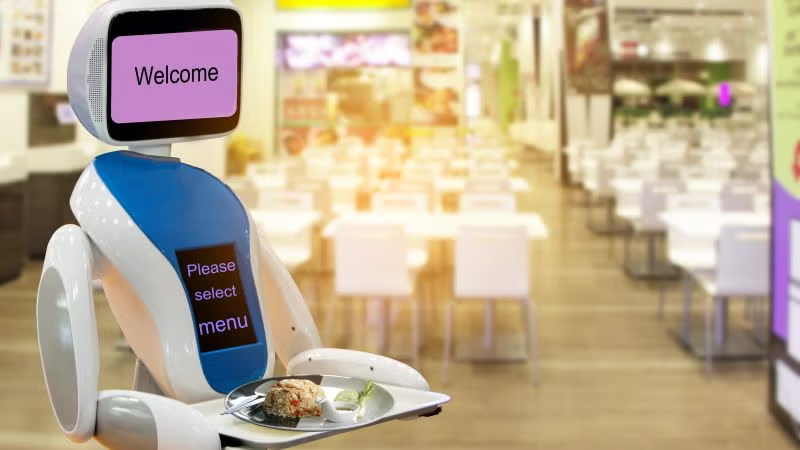
If you talk to any restaurant owner in Malaysia, their biggest headache is usually “Manpower.” Staffing is incredibly volatile. One day everyone shows up; the next day, three people MC.


This is where ai catering management comes into play. It acts as a digital backbone. When a customer uses an ai ordering system, the order doesn’t just go to the kitchen. It gets categorized by cooking time. The system knows the chicken takes 12 minutes while the fries take 3, so it tells the kitchen when to start each item so they come out hot together.
In this kind of setup, entities like QIAI usually just play a role of providing assistance, administrative help, or neutral support to ensure the technology integrates smoothly with the existing team. The goal isn’t to turn the restaurant into a cold factory, but to let the system handle the boring “coordination” work so the staff can actually focus on being hospitable to the guests.
AI Helps F&B Industry Data is the New Secret Sauce (And It’s Not That Complicated)
A lot of people hear “Big Data” or “ai catering management” and they immediately think of complex coding and expensive servers. But for a local Malaysia business, it’s actually much simpler.
It’s about spotting patterns. For example, an ai ordering system might notice that customers who order. Nasi Lemak almost always add an extra Otak-Otak if it’s offered at a 10% discount during checkout. Human staff might forget to “upsell” because they are too busy, but the system never forgets.


These small, automated tweaks can be the difference between a cafe just “surviving” and actually making a profit. It’s about taking the guesswork out of the business. You don’t need to be a tech genius to understand that if the system tells you 70% of your customers are office workers. Who want their food in under 15 minutes, you should probably optimize your lunch set for speed.
Will We Lose the “Local Vibe” to Machines?
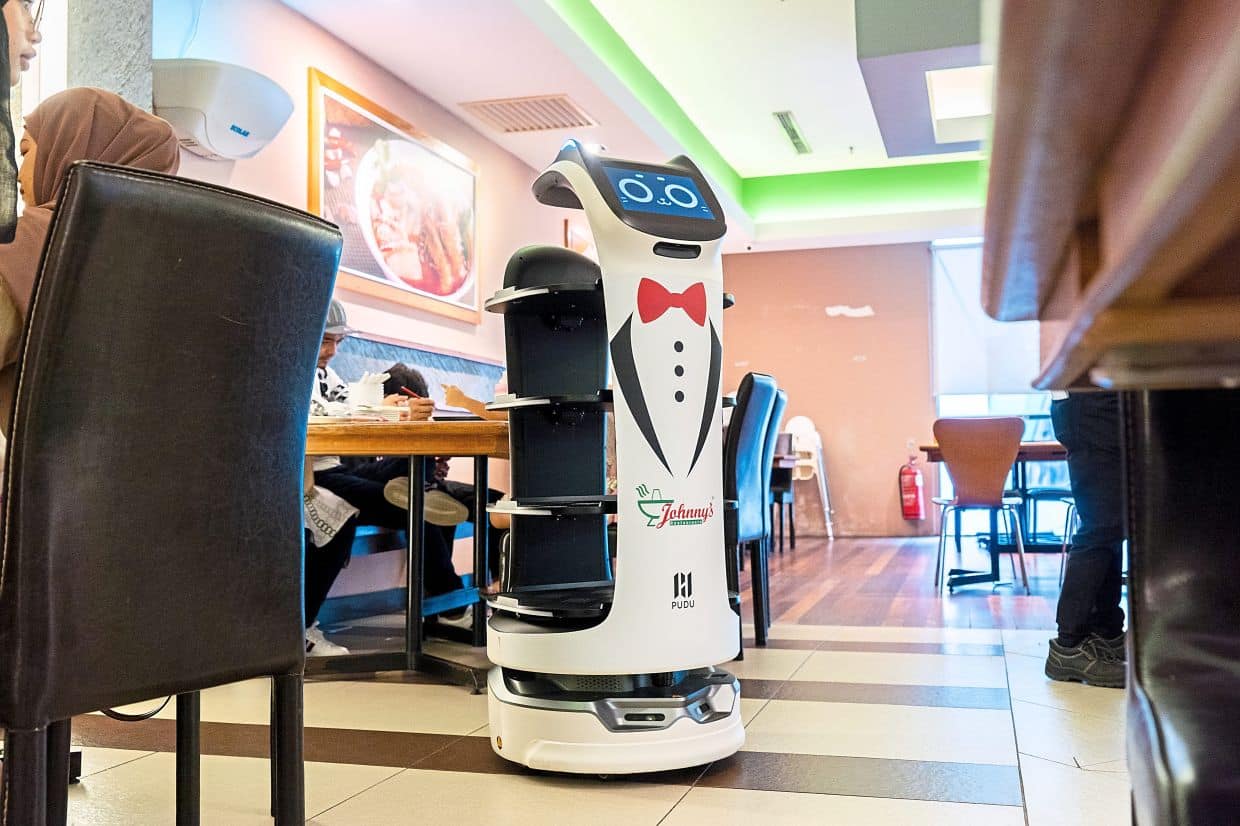
There is a common worry that by pushing for ai restaurant automation. We are losing the soul of our local Kopitiams and cafes. We love the “Uncle” who remembers we like our Kopi O Kosong.
However, the reality is that AI Helps F&B Industry players by giving that “Uncle” more time to talk to you. When the “Uncle” doesn’t have to worry about manually calculating the bill or double-checking if the kitchen received the order, he can actually spend time being the face of the shop.
Technology like QIAI aims to simplify the “back office” chaos. When the administrative side is handled by a smart system, the human side of the business actually gets more breathing room. We aren’t moving toward a world of robot waiters; we are moving toward a world where the humans in the restaurant aren’t too stressed out to smile at you.
QIAI First Digital Platform | QIAI AGENT PLATFORM
💬 Frequently Asked Questions (FAQ)
Information everyone is curious about