Why AI in healthcare diagnostics is the silent partner your clinic needs
If you’ve walked into a hospital lately, you might have noticed things feel a little more “high-tech” than they used to. It’s not just the fancy touchscreens at the registration counter or the fact that you can get your blood test results on an app. There’s something deeper happening.
Think back to the last time you went for an X-ray or a CT scan. You wait for the appointment, you do the scan, and then you wait again—sometimes for days—for the radiologist to write the report. During that waiting period, you’re usually a bit kan cheong (anxious), wondering if everything is okay. But what if a computer could look at that image the second it was taken and flag the most urgent cases to the top of the doctor’s pile?
That’s essentially the world we’re moving into. It’s a shift from “let’s wait and see” to “let’s know right now.”
It’s not Sci-Fi, it’s just better math for your health
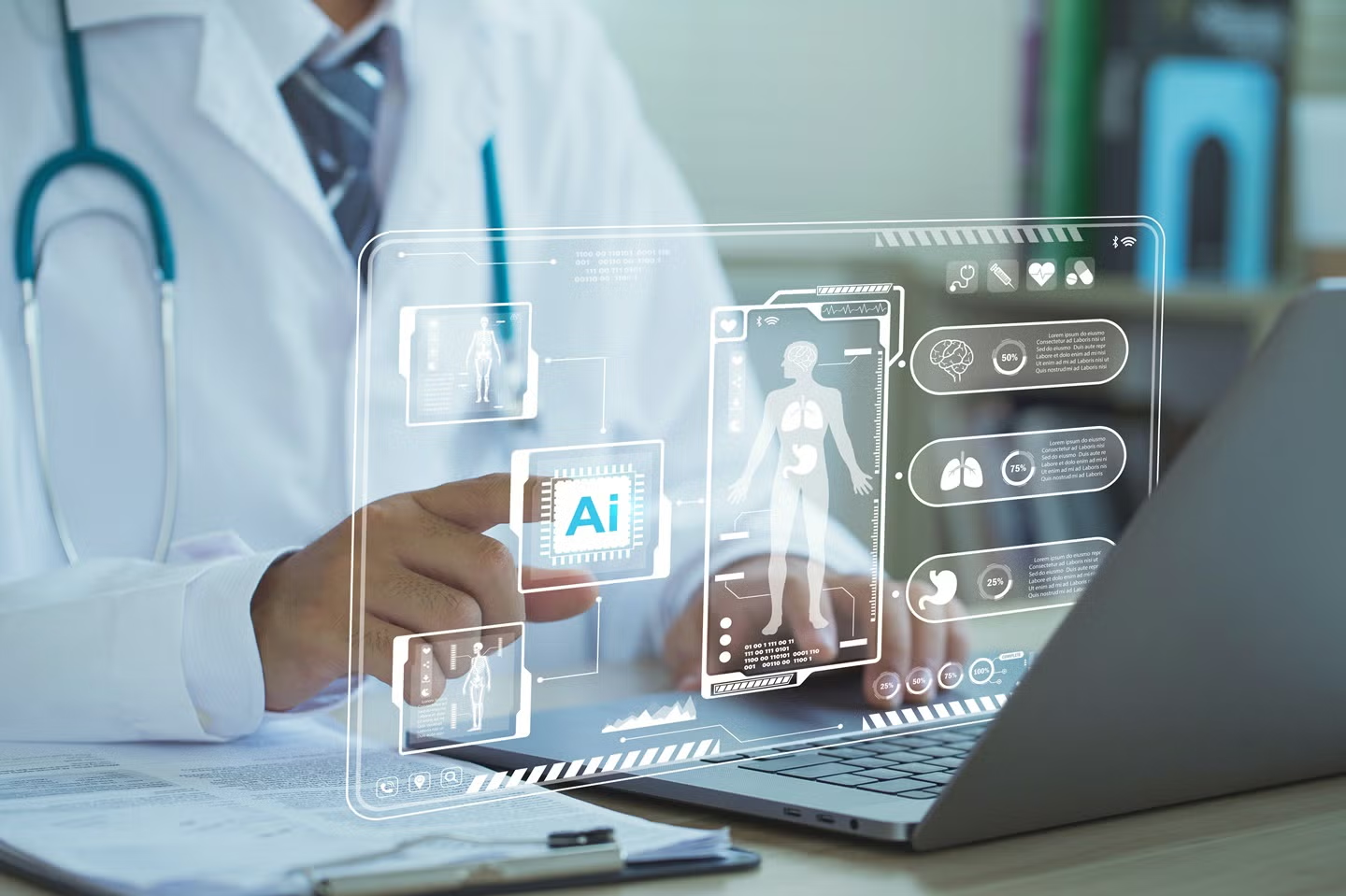
When people hear “AI,” they often think of robots from movies or those chatbots that give weird answers. But in a clinic or a hospital, AI is much more grounded. It’s basically very, very smart math that has “seen” millions of medical cases before it even looks at yours.


The real breakthrough isn’t that the machine is “thinking” like a human. It’s that it doesn’t get tired. A human doctor might see 50 patients a day, and by 5:00 PM, their eyes might be a bit heavy. Machine learning in healthcare works differently; the 1,000th scan it sees in a day is analyzed with the exact same precision as the first one at 8:00 AM.
It’s like having a senior consultant who has read every medical textbook in existence, standing right behind your doctor, whispering, “Hey, look closely at this tiny shadow over here.” This isn’t about replacing the doctor; it’s about giving them a superpower. When we talk about AI-powered diagnostic platforms, we are really talking about a safety net that catches things that might be too subtle for a human to notice in a rush.


The Core Insight
Key TakeawayAI is a Safety Net, Not a Substitute
Breakthroughs in AI in healthcare diagnostics center on machine endurance—spotting subtle patterns without fatigue, allowing doctors to trade data-sorting for human-centered care.
The “Eye” that never gets tired
The biggest area where this is “blowing up” right now is medical imaging. If you’ve ever looked at your own X-ray, it usually just looks like a bunch of grey blobs and shadows. To us, it’s a mess. To a trained radiologist, it’s a map. But to deep learning medical imaging software, it’s a massive set of data points.
These systems are trained on “Big Data.” They look at millions of historical images where we already know the outcome—for example, which patients actually had a fracture or a tumor. By comparing your new scan to those millions of past examples, the software can spot patterns.
For instance, in lung screenings, sometimes a tiny nodule is hidden behind a rib. A human might miss it because of the overlapping bones. But an AI doesn’t see “bones” or “lungs”—it sees pixel density. It can “subtract” the bone from the image digitally to see what’s underneath. This is what we call AI medical imaging analysis, and it’s saving lives by catching things at Stage 1 instead of Stage 4.
AI in healthcare diagnostics: Finding the needle in the haystack
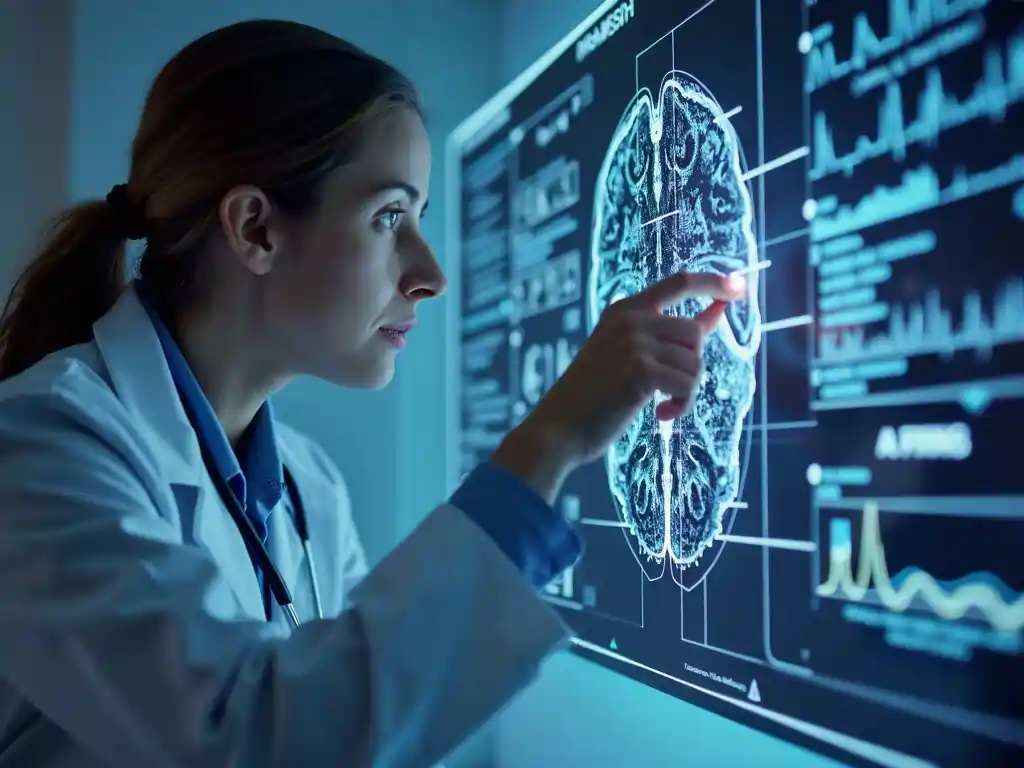
In Asia, especially in places like Malaysia or Singapore, we have a very “high-volume” healthcare system. Our public hospitals are always packed, and doctors are constantly under pressure to move fast. This is where AI in healthcare diagnostics becomes a lifesaver—literally.


Imagine a busy ER. Everyone is waiting. The doctor has a stack of heart ECGs to review. Usually, they go in the order they were taken. But an automated diagnostic tool can pre-screen all those ECGs in milliseconds. If it detects a specific rhythm that looks like a silent heart attack, it can immediately alert the nurse to bring that patient to the front of the line.
This isn’t just about speed; it’s about prioritization. We call this predictive analytics healthcare. It’s the ability to look at current data (like your blood pressure, age, and recent labs) and predict that you are at high risk of a certain condition before you even feel the symptoms. It’s like a weather forecast for your body. If the “rain” is coming, you’d rather know today so you can grab an umbrella, right?
Why the industry is pouring money into Digital Health
If you follow the news or the stock market, you’ll see that healthcare AI investment trends are skyrocketing. Big tech companies and specialized AI healthcare startups are racing to build the next “big thing.” But why now?
Part of it is the AI healthcare market growth. As our population ages (and we Asians are living longer but dealing with more chronic issues like diabetes), the demand for healthcare is outstripping the number of doctors we can train. We simply don’t have enough hands.
Digital health innovation is the only way to close that gap. By using AI healthcare technology, clinics can handle more patients without burning out their staff. It’s about efficiency. For example, if a clinic uses an AI clinical diagnostics tool to handle the routine paperwork or the initial screening of common coughs and colds, the doctor has more time to actually talk to you about your lifestyle and long-term health.
Even brands like MiCare are looking at how to make this ecosystem smoother. It’s about connecting the dots—from the moment you feel unwell to the moment you get your medicine—making sure the data flows correctly and securely.
Will an AI replace my family doctor?
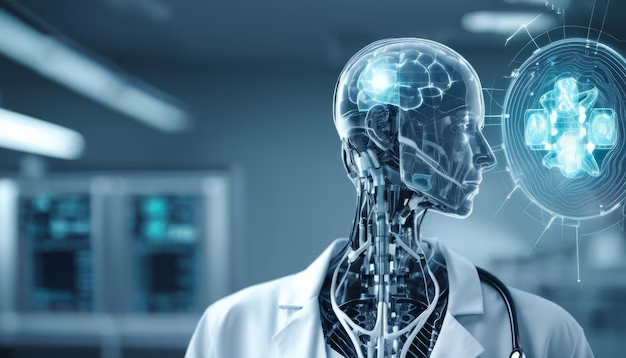
This is the question everyone asks. “If the computer is so smart, why do I need to pay for a doctor?” The answer is simple: Healthcare is deeply human. An AI can tell you that you have a 92% probability of a certain condition based on your lab results, but it can’t sit with you, look you in the eye, and help you navigate the emotional weight of that news. It doesn’t understand your family history in the way your long-time GP does.
The future of AI in healthcare is a partnership. Think of it like a pilot and an autopilot. The autopilot handles the thousands of micro-adjustments during a long flight, but you definitely want a human pilot in the cockpit when things get complicated or when a tough decision needs to be made.
So, the next time you hear about artificial intelligence medical diagnosis, don’t think of a cold, metallic machine. Think of it as a very diligent assistant that is helping your doctor be the best version of themselves. It’s about making sure that no matter how busy the clinic is, you get the most accurate, data-backed care possible.
In the end, we all just want to get better and get home to our families. If a bit of smart software helps us do that faster, that’s a win for everyone.
Should we really trust a machine with our health?
AI in diagnosticsUnderstanding how smart algorithms and human expertise work together to keep you safe.