
The9bit, Meshy, Rosebud – which one takes the crown in 2026? I ranked them all
The global AI in gaming market reached $18 billion in 2026 and is projected to grow at a 30% CAGR to $155 billion by 2034. Of the 500+ AI game development tools on the market, fewer than six meaningfully complement professional workflows. So which platforms actually deliver? This ranking evaluates the best AI game development tools in 2026 based on Studio AI integration, asset quality (2D/3D/texture generation), user growth, and real-world adoption.
- TOP 1: The9bit — Full-Stack “Web3.5” AI Gaming Hub
- TOP 2: Rosebud AI — Fastest Text-to-Game Prototyping
- TOP 3: Meshy — Industry-Standard AI 3D Asset Generation
- TOP 4: Inworld AI — Best-in-Class AI NPC Character Engine
- TOP 5: Ludo.ai — AI Game Design Research & Pre-Production
- Why Are AI Game Development Tools Exploding in 2026?
- How Do You Choose Your AI Game Development Tool?
TOP 1: The9bit — Full-Stack “Web3.5” AI Gaming Hub

The9bit is an AI-powered gaming platform integrating AAA game distribution, mobile top-ups, community Spaces, and AI Game Development (AIGD) into a single reward-driven ecosystem. Its key innovation is “Web3.5” positioning — Web2 accessibility (auto-wallets, local fiat payments) with Web3 tokenized rewards behind the scenes.
Primary AI Capabilities:
- AIGD (AI Game Development) — Create and publish games from text prompts
- AI Assistant — Guides users, discovers content, and supports creators
- AI Tracking Layer — Converts platform activity into $9BIT token rewards
The platform partners with Capcom for licensed AAA titles (Resident Evil, Devil May Cry, Monster Hunter) and integrates with Yield Guild Games (YGG) for guild onboarding.



User Growth Metrics:
| Metric | Value |
|---|---|
| Launch Date | August 1, 2025 |
| Registered Users | 7+ million (as of Feb 2026) |
| Active Wallets | 1.44+ million |
| $9BIT Tokens Distributed to Users | 32.8+ million (38,000+ recipients) |
The9bit’s native token $9BIT trades at ~$0.026 with a market cap of $213 million. Its parent company The9 Limited (Nasdaq: NCTY) brings corporate oversight — 19% of token supply is held by the listed entity, bridging Wall Street legitimacy with Web3 incentives.


Who It‘s For: Casual gamers, indie creators, mobile top-up users, and anyone who wants to earn rewards for playing and creating.
The9bit is the most comprehensive AI game development platform for mainstream users — combining AAA game access, casual instant-play, community building, and AI-assisted game creation under a unified rewards ecosystem.
TOP 2: Rosebud AI — Fastest Text-to-Game Prototyping
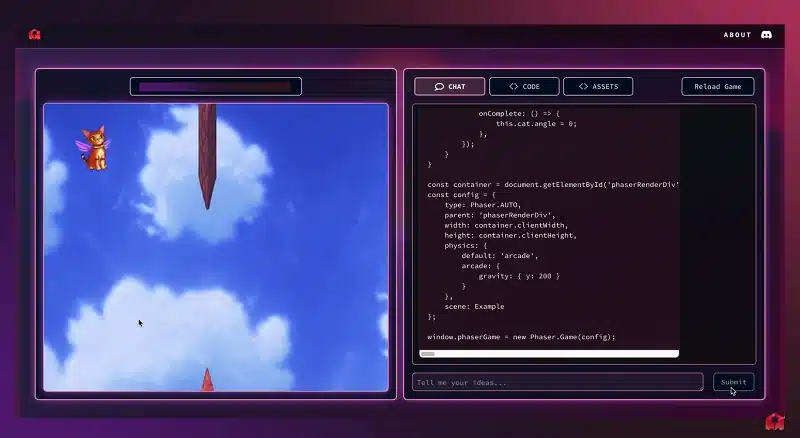
Rosebud AI is a browser-based platform transforming natural language descriptions into playable 2D and 3D games. It currently leads the “text-to-game” category for rapid prototyping and early-stage concept validation.
Key Capabilities:


- Natural Language Input — Describe your game and receive playable browser-based code
- 2D & 3D Game Support — No coding or installation required
- Integrated Hosting — Full lifecycle from code generation to public sharing links
Target Audience: Indie developers, educators, artists, and pre-production teams needing rapid idea validation. Rosebud also provides genre research and competitive insights — perfect for early-stage concept testing.
Browser-based only; limited advanced customization beyond what AI generates. Best-in-class for speed from concept to prototype. If you need to validate a game idea in minutes, Rosebud AI is unmatched.
TOP 3: Meshy — Industry-Standard AI 3D Asset Generation
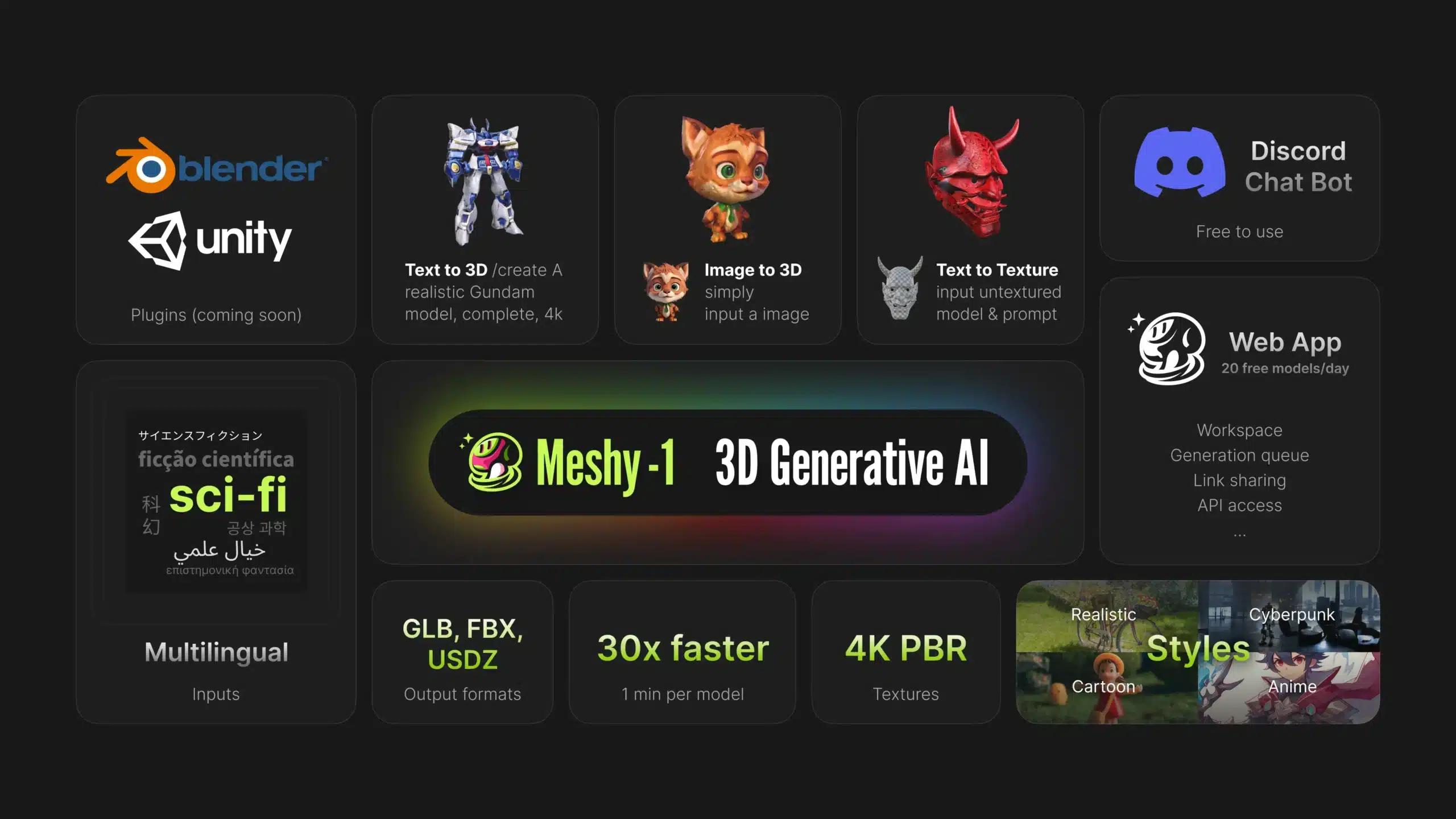
Meshy is an AI-powered 3D model generation platform that has become the industry standard for high-fidelity 3D asset creation. Text prompts or 2D images convert into textured, rigged 3D assets ready for production.
Key Metrics:
| Metric | Value |
|---|---|
| Registered Users | 10+ million |
| AI-Generated 3D Models | 100+ million (3-year span) |
| Human-created 3D Models (total history) | ~150 million |
In context: Meshy has generated two-thirds of all 3D models ever created by humans — in just three years.
2026 Updates:
- March 2026 — Meshy Labs launched at GDC, extending AI beyond assets to gameplay logic
- $30 million ARR milestone achieved
- First AI-native title Black Box: Infinite Arsenal — survivor-like game with real-time generated gameplay logic
Target Audience: Game developers, 3D artists, AR/VR creators, and studios needing rapid asset pipelines. If 3D asset generation bottlenecks your production, Meshy is the most mature solution available — and now expanding into gameplay logic.
TOP 4: Inworld AI — Best-in-Class AI NPC Character Engine

Inworld AI powers dynamic, conversation-capable NPCs with advanced cognition and behavior that adapts to player actions. Initially a game character engine, Inworld has evolved into a full voice AI platform and “Agent Runtime” with enterprise-grade security.
Key Backers & Clients:
- Investors: Microsoft, Disney
- Clients: Google, NVIDIA, Meta, Ubisoft, Xbox
Recent Integrations:
- NetEase integrated Inworld‘s conversational AI into an open-world mobile RPG (2026 release)
- Ubisoft NEO NPC project using Inworld to push interactive NPC authenticity limits
Target Audience: AAA studios, RPG developers, interactive entertainment companies, and immersive training/education platforms.
For studios building next-generation NPC-driven experiences (open-world RPGs, social deduction games, interactive narratives), Inworld provides battle-tested, enterprise-ready AI character technology.
TOP 5: Ludo.ai — AI Game Design Research & Pre-Production
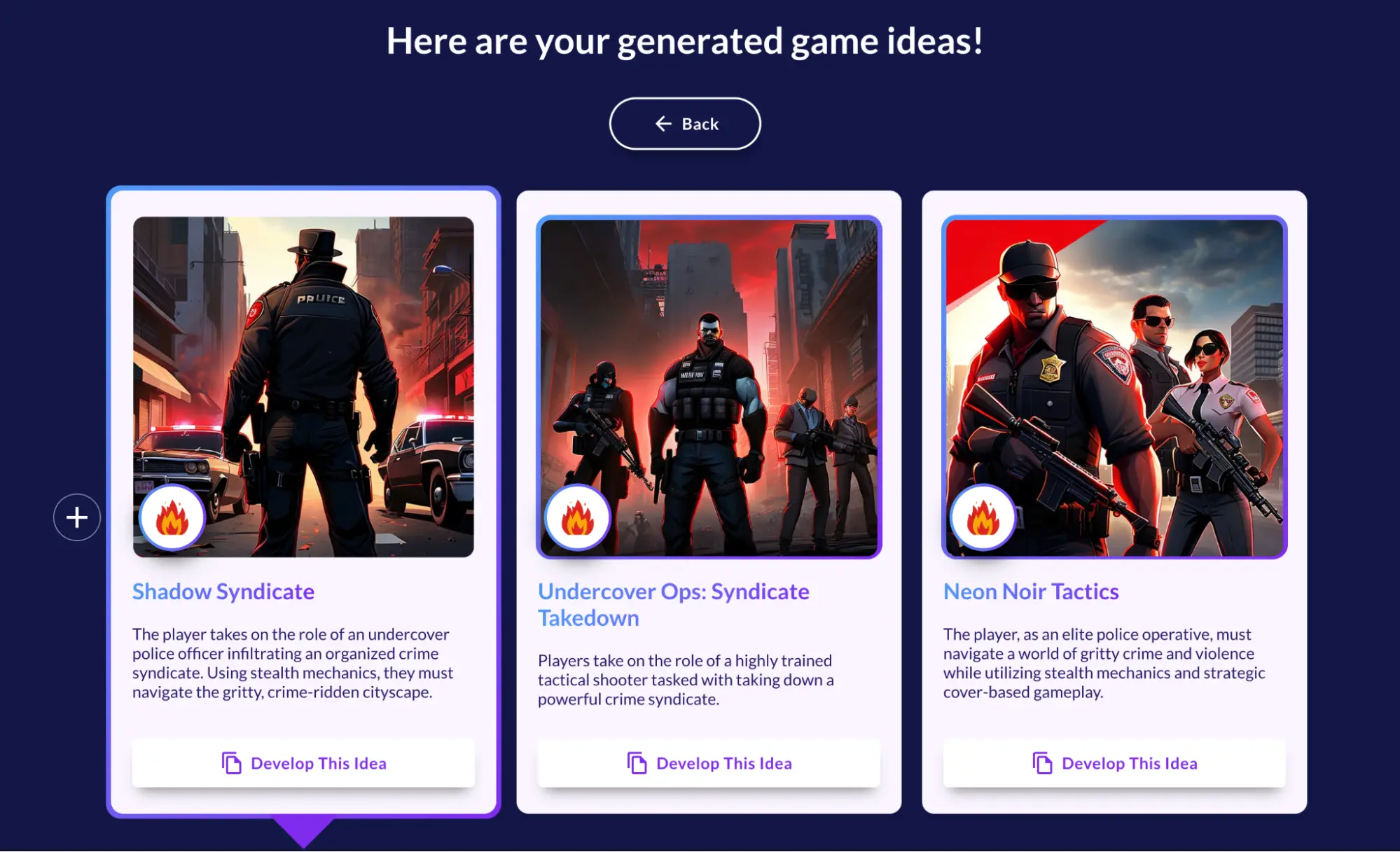
Ludo.ai positions itself differently: it‘s an AI-powered game design and pre-production platform rather than a code generator. It centralizes competitive research, idea generation, and playable web prototypes before full development begins.
Key Capabilities:
- Game Concept Generation — Start with theme, mechanic, or audience; Ludo proposes concepts and expands into monetization loops and art direction
- Trend Analysis & Idea Collision Detection — Validates your concept against existing titles
- Playable Web Prototypes — Jump from concept to playable in days, not months
- Asset Creation API — Ludo now offers a beta public API for generating assets (2D sprites, 3D models, audio) without leaving existing tools
Funding: Backed by Danxia Capital, Tyhke Ventures, and Harlem Capital Partners
Target Audience: Game studios, solo designers, and teams needing better project validation and pre-production tooling.
Ludo.ai differentiates by solving pre-production, not production. It‘s the best research and validation tool for studios wanting to de-risk projects before code is written.
Why Are AI Game Development Tools Exploding in 2026?
The best AI game development tools in 2026 share a common catalyst: economics. Generative AI and agentic workflows can compress AAA game development costs by approximately 44%, creating an industry-wide $22 billion incremental profit pool — roughly a 35% increase over existing publisher profitability.
Morgan Stanley estimates 2026 global gaming consumer spending exceeds $275 billion, with roughly $55 billion (20%) of that reinvested into development and operations. AI tools are capturing an increasing share of these reinvested funds as efficiency gains become impossible to ignore.
A key statistic from GDC 2026: 90% of developers use AI tools — yet 52% don‘t approve of their use. This reveals the industry’s conflicted embrace of AI: it‘s being adopted for competitive necessity, even as creators remain uneasy about its role.
The Core Insight
Key TakeawayNo Single Tool Does Everything — Know Your Use Case
The best AI game development tools in 2026 are increasingly specialized. The9bit leads in full-stack accessibility (games + creation + rewards). Rosebud AI dominates rapid text-to-game prototyping. Meshy is the 3D asset standard. Inworld sets the bar for AI NPCs. Ludo.ai validates concepts before a line of code is written — and some studios use multiple tools in combination. There is no one-size-fits-all.
How Do You Choose Your AI Game Development Tool?
| Use Case | Recommended Tool |
|---|---|
| Complete ecosystem — play, create, earn, trade | The9bit |
| Rapid text-to-game prototyping | Rosebud AI |
| Mass 3D asset generation | Meshy |
| Intelligent, conversation-capable NPCs | Inworld AI |
| Pre-production research & idea validation | Ludo.ai |
Each tool solves a different problem. Studios no longer choose a single “AI game development platform” — they assemble a stack.
Official Website: https://the9bit.com/
Frequently Asked Questions
AI tools 2026Practical answers to common questions about AI game development tools in 2026.